Librarian Kitten Cross Stitch Pattern: A Masterpiece for Experienced Stitchers
The world of needlework has evolved significantly, moving beyond simple sampler designs into complex, narrative-driven artworks that demand precision, patience, and a high level of technical skill. Among the latest additions to this sophisticated genre is the Librarian Kitten Cross Stitch Pattern, a design specifically crafted for experienced stitchers who are ready to tackle large-scale, detailed projects. This pattern is not merely a hobbyist’s pastime; it is a comprehensive artistic endeavor that combines whimsical charm with rigorous structural complexity.
This article explores the intricacies of the Librarian Kitten design, examining its specifications, the materials required, the digital resources provided, and why it stands out as a premier choice for those seeking to expand their cross-stitch repertoire. Whether you are a professional textile artist looking for a new challenge or a dedicated hobbyist aiming to create a centerpiece for your home, understanding the nuances of this project is essential for success.
Understanding the Scale and Complexity
Before beginning any major embroidery project, one must first grasp the sheer magnitude of the work involved. The Librarian Kitten is classified as a full-coverage cross-stitch pattern, meaning every inch of the fabric will be covered with stitches, leaving no negative space. This approach creates a dense, tapestry-like finish that requires significant time and stamina. For experienced stitchers, this density is not a drawback but a feature, offering a rich texture and vibrant color palette that simpler designs cannot achieve.
The dimensions of the design are substantial. Measuring 350 stitches wide by 350 stitches high on 14-count fabric, the finished piece transforms into a square measuring approximately 25 inches by 25 inches (63.5 cm x 63.5 cm). To put this in perspective, this is roughly the size of a standard wall clock face or a small throw pillow. However, the physical footprint changes depending on the fabric count chosen, allowing stitchers to customize the final aesthetic based on their available frame sizes and personal preferences.
Fabric Count Variations
The versatility of the Librarian Kitten pattern lies in its adaptability to different fabric counts. While 14-count Aida is the industry standard for general cross-stitching, experienced artists often experiment with higher counts for finer detail or lower counts for bolder textures. Below is a breakdown of how the finished size varies across different fabric types:
- 14 Count Fabric: This is the recommended baseline. The finished size will be 25 inches wide by 25 inches high (63.5w x 63.5h cm). This count offers a balanced ratio between stitch definition and speed of completion.
- 16 Count Fabric: Choosing a finer fabric increases the resolution of the image. On 16-count linen or evenweave, the finished size reduces to 21.9 inches wide by 21.9 inches high (55.6w x 55.6h cm). This results in a sharper, more intricate look, ideal for displaying fine details in the kitten’s fur or the librarian’s accessories.
- 18 Count Fabric: Moving further into fine fabrics, such as 18-count Linen, the canvas shrinks to 19.5 inches wide by 19.5 inches high (49.4w x 49.4h cm). This option is perfect for stitchers who prefer a compact yet highly detailed artwork that fits well in smaller frames.
- 25 Count Fabric: For the ultimate challenge, using 25-count fabric (often paired with two strands of floss) yields a miniature-style result of 14 inches wide by 14 inches high (35.6w x 35.6h cm). This requires exceptional eye strain management and steady hands, rewarding the artist with a jewel-like quality to the final piece.
Material Requirements and Thread Management
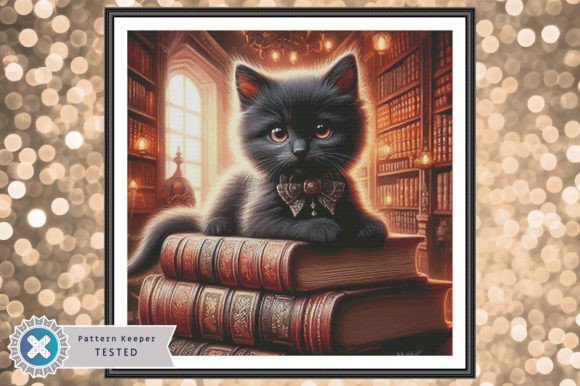
A project of this caliber demands meticulous planning regarding materials. The Librarian Kitten pattern utilizes a robust palette of 75 distinct DMC thread colors. Managing this many shades can be overwhelming for novice stitchers, but for experienced crafters, it presents an opportunity to practice advanced organization techniques. The variety of colors suggests a design with deep shadows, highlights, and subtle gradients, likely depicting a cozy library scene filled with books, perhaps a sleeping kitten among stacks of literature, or a playful cat interacting with reading materials.
To manage the thread usage effectively, the digital package includes a comprehensive "Floss Usage" guide. This section breaks down exactly which colors are needed for each fabric count (14, 16, 18, and 25). This is crucial because the visual impact of a specific shade can change when stitched on different fabric densities. For instance, a light gray might appear washed out on 14-count but pop beautifully on 25-count. By consulting these guides beforehand, stitchers can purchase the correct amounts of floss, reducing waste and ensuring color consistency throughout the months-long stitching process.
Digital Resources and Workflow Integration
In the modern era of crafting, digital convenience plays a pivotal role in project success. Upon purchase, the buyer receives two distinct PDF files designed to streamline the workflow from start to finish. These files are not just static images; they are functional tools integrated into contemporary stitching apps.
Content of the PDF Files
The first file typically serves as the primary reference document. It includes:
- Cover Page: A high-resolution preview of the finished artwork, providing motivation and a clear vision of the end goal.
- Symbol Key: A legend explaining the chart symbols. Given the complexity of the design, a clear key is vital to prevent misinterpretation of stitches, especially if the pattern uses specialized stitches alongside standard cross-stitches.
- Floss Usage Charts: As mentioned earlier, separate lists for 14, 16, 18, and 25 counts ensure accurate material preparation.
The second file focuses on the actual stitching charts, offered in two formats to suit different working styles:
- Black and White Symbol Chart: This version strips away color distractions, allowing the stitcher to focus purely on the structure and flow of the design. It is particularly useful for checking progress or for use in bright lighting conditions where colored screens might cause glare.
- Color with Symbol Chart: This is the primary working document. It overlays the specific DMC colors onto the symbol grid, making it easy to identify which thread to pull next without constantly referring back to a legend.
App Compatibility
One of the standout features of this pattern is its compatibility with popular mobile applications. The PDFs are optimized for use with Pattern Keeper and the Markup R-XP app. These applications allow stitchers to mark off completed sections digitally, zoom in on specific areas for intricate detailing, and adjust brightness or contrast for better visibility. For professionals who stitch on the go or in varying light conditions, having the pattern accessible on a tablet or smartphone is invaluable. It eliminates the need to print massive sheets of paper, which can be cumbersome to navigate and prone to tearing or staining.
Who Is This Pattern For?
The explicit requirement for cross-stitch experience indicates that this is not a beginner-friendly project. The Librarian Kitten is tailored for individuals who have already mastered the basics of tension control, thread separation, and color blending. It appeals to a diverse audience:
- Professional Artists: Those creating custom commissions or portfolio pieces may find the unique subject matter and high stitch count appealing for showcasing technical proficiency.
- Hobbyists Seeking Challenge: Seasoned stitchers who have completed dozens of smaller projects often seek larger canvases to test their endurance and attention to detail.
- Educators and Mentors: Instructors teaching advanced classes might use this pattern as a capstone project for students demonstrating mastery of complex color palettes.
- Home Decor Enthusiasts: Individuals looking to create statement wall art will appreciate the substantial size and full-coverage nature of the design, which ensures the artwork commands attention in any room.
Considerations for Success
While the Librarian Kitten pattern offers a rewarding creative journey, there are practical considerations to keep in mind. First, the disclaimer regarding monitor color variation is important. Digital representations of threads do not always match the physical dye lots of DMC floss perfectly. Factors such as screen calibration, ambient lighting, and individual perception of color can lead to discrepancies. Therefore, it is advisable to view the physical skeins of thread under natural daylight before committing to the project.
Additionally, the time investment required for a 350x350 stitch project cannot be overstated. Even for an experienced stitcher producing several inches per day, this project could take weeks or months to complete. Planning for a consistent stitching routine is essential to maintain momentum. Using a hoop or frame that accommodates the largest planned size (for 14-count fabric) can also save time, as switching frames when changing fabric counts would be disruptive.
Conclusion
The Librarian Kitten Cross Stitch Pattern represents the pinnacle of modern digital cross-stitch design. By combining a whimsical theme with rigorous technical requirements, it offers a unique blend of artistic expression and mechanical precision. The inclusion of multiple fabric count options, detailed digital resources, and app compatibility ensures that stitchers have all the tools necessary to succeed. For those willing to invest the time and effort, the result is not just a piece of needlework, but a testament to skill, patience, and creativity. Whether displayed in a cozy reading nook or framed as a centerpiece in a living room, this full-coverage masterpiece promises to be a cherished addition to any collection.