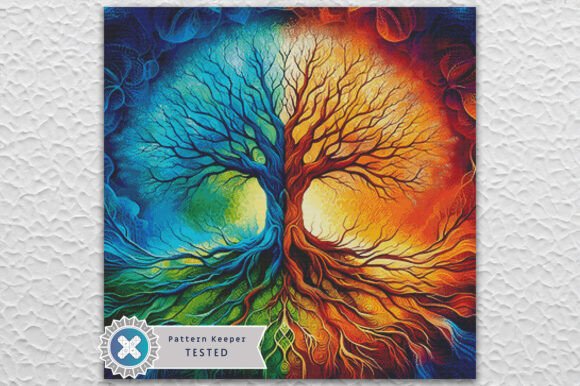
Tree of Life Modern Cross Stitch Pattern
Cross-stitching has evolved significantly from its traditional roots, transitioning from simple sampler designs to complex, large-scale artistic statements. For the advanced stitcher, the Tree of Life Modern Cross Stitch Pattern represents more than just a hobby project; it is a substantial undertaking that demands strategic planning, patience, and technical precision. This full-coverage design is not merely about filling fabric with thread; it is an exercise in project management, aesthetic decision-making, and long-term commitment. Understanding the scope and implications of this pattern allows creators to approach the work with clarity, ensuring that the final piece aligns with their creative goals and operational capabilities.
The primary distinction of this pattern lies in its scale and complexity. With a design size of 350w x 350h stitches, this project occupies a significant physical space and requires a considerable investment of time and resources. Unlike smaller patterns that offer quick satisfaction, this design serves as a marathon rather than a sprint. It is designed for those who have already mastered the basics of cross-stitch and are ready to tackle a canvas that challenges their endurance and attention to detail. The use of 75 DMC colors further elevates the challenge, requiring meticulous organization and a keen eye for color blending and shading. This level of detail transforms the stitching process into a meditative practice, where every stitch contributes to a larger, cohesive whole.
Strategic Planning for Large-Scale Projects
Approaching a project of this magnitude requires a shift in mindset from casual crafting to structured execution. The finished dimensions vary depending on the fabric count chosen, which directly impacts the visual density and the overall timeline of the project. For instance, on 14-count fabric, the finished size measures 25w x 25h inches (63.5w x 63.5h cm), creating a bold, gallery-worthy statement piece. In contrast, using 18-count fabric reduces the finished size to 19.5w x 19.5h inches (49.4w x 49.4h cm), offering a finer detail resolution but requiring more stitches per inch. Selecting the appropriate fabric count is a critical decision that affects both the aesthetic outcome and the practical logistics of the project.
Decision-makers in the crafting community often overlook the logistical aspects of large projects. A 350x350 stitch grid means over 122,000 individual stitches. Even at a moderate pace of 100 stitches per hour, this equates to over 1,200 hours of work. This calculation underscores the necessity of realistic goal-setting. Entrepreneurs and professionals who apply similar planning principles to their business projects will recognize the value of breaking down such a massive task into manageable milestones. By tracking progress through the included Project Tracker, stitchers can monitor their velocity, adjust their schedules, and maintain momentum without burning out.
Fabric Selection and Resource Allocation
The choice of fabric count is not arbitrary; it dictates the texture, durability, and visual impact of the final artwork. On 16-count fabric, the finished dimensions are 21.9w x 21.9h inches (55.6w x 55.6h cm), striking a balance between the boldness of 14-count and the intricacy of 18-count. For those seeking extreme detail, 25-count fabric yields a compact 14w x 14h inch (35.6w x 35.6h cm) piece, but this requires specialized tools and heightened visual acuity. Each option presents unique advantages and constraints. The 14-count option offers ease of handling and faster completion times, making it suitable for those who prioritize visibility and broad strokes. Conversely, the higher counts appeal to purists who value precision and fine gradation in color.
Resource allocation extends beyond fabric to include thread management. With 75 DMC colors, the risk of tangling, loss, or misidentification is high. A systematic approach to organizing flosses is essential. Grouping colors by hue or tonal family can streamline the selection process, reducing the cognitive load during stitching sessions. This method mirrors inventory management strategies used in retail and manufacturing, where efficiency is derived from logical categorization. By implementing such systems, stitchers can minimize downtime and maintain a steady workflow.
Technical Execution and Quality Control
The Tree of Life Modern Cross Stitch Pattern includes comprehensive PDF files designed to support the stitcher through every phase of the project. These files contain a Mockup, Symbol Key, Floss usage guide for 14-count fabric, Black and white symbol chart, and a Project Tracker. The inclusion of a black and white symbol chart is particularly valuable for reducing eye strain and conserving ink during printing. It also ensures that the pattern remains legible regardless of screen brightness or color calibration issues, addressing a common pain point in digital crafting resources.
Quality control in cross-stitching involves maintaining consistent tension and alignment throughout the project. With 75 colors, the potential for error increases, making the symbol key an indispensable reference tool. Advanced stitchers understand that deviations in stitch direction or tension can disrupt the overall texture of the piece. Therefore, regular self-assessment is crucial. Using the Project Tracker to log daily progress and note any discrepancies allows for timely corrections. This iterative process of monitoring and adjusting is akin to agile project management, where continuous feedback loops drive improvement and ensure alignment with the original vision.
Digital Integration and Workflow Optimization
In today’s digital-first environment, the flexibility of the PDF format offers significant advantages. The pattern can be printed for traditional use or imported into apps like Pattern Keeper or Markup R-XP for digital annotation. This adaptability supports diverse working styles, allowing users to choose the medium that best suits their preferences. Digital integration enables features such as zooming, highlighting specific sections, and updating progress in real-time. For tech-savvy professionals, this seamless transition between physical and digital realms enhances productivity by reducing friction in the workflow.
However, reliance on technology also introduces considerations regarding data security and accessibility. Ensuring that digital backups are maintained protects against hardware failures or file corruption. Moreover, understanding the limitations of screen-based viewing is important. Colors may appear differently on various screens due to variations in display technology and calibration. Cross-referencing digital images with physical thread samples mitigates this risk, ensuring accurate color representation. This attention to detail reflects a broader principle: leveraging technology while remaining grounded in tangible verification.
Risks and Mitigation Strategies
While the Tree of Life Modern Cross Stitch Pattern offers immense creative rewards, it is not without risks. The most significant challenge is the potential for project abandonment due to underestimation of time and effort. Without clear goals and a structured plan, even experienced stitchers may find themselves overwhelmed by the sheer volume of work. To mitigate this, it is advisable to set incremental targets and celebrate small victories along the way. Breaking the project into thematic sections, such as the trunk, branches, and leaves, provides natural stopping points and fosters a sense of accomplishment.
Another risk is the financial investment required for materials. Purchasing 75 skeins of DMC floss, along with high-quality fabric and hoops, represents a substantial cost. Budgeting for these expenses upfront prevents mid-project shortages and ensures continuity. Additionally, the physical toll of extended stitching sessions should not be overlooked. Ergonomic considerations, such as proper lighting, seating, and regular breaks, are essential for sustaining long-term engagement. Ignoring these factors can lead to fatigue and injury, detracting from the enjoyment of the craft.
Long-Term Value and Creative Growth
Beyond the immediate satisfaction of completing a large project, the Tree of Life Modern Cross Stitch Pattern offers lasting benefits. It serves as a testament to perseverance and skill development. The discipline cultivated through this endeavor translates to other areas of life, reinforcing habits of focus, patience, and strategic thinking. For educators and mentors, this pattern can serve as a case study in project management, illustrating the importance of planning, resource allocation, and adaptive execution.
Furthermore, the finished piece holds intrinsic value as a work of art. Its modern aesthetic and intricate detail make it a conversation starter and a source of pride. Displaying such a piece in a home or office setting communicates a dedication to craftsmanship and creativity. It signals an appreciation for quality and a willingness to invest in meaningful pursuits. In a world dominated by disposable content, owning a handcrafted masterpiece stands as a powerful statement of intentionality and depth.
Conclusion for Intentional Craftsmanship
Ultimately, the success of engaging with the Tree of Life Modern Cross Stitch Pattern depends on the stitcher’s ability to approach it with intention. It is not a task to be undertaken lightly or randomly. By understanding the scale, preparing thoroughly, and executing with precision, advanced stitchers can transform this challenging pattern into a rewarding experience. The journey involves more than just stitching; it encompasses planning, problem-solving, and personal growth. Embracing these elements ensures that the final result is not only visually stunning but also deeply fulfilling, reflecting the care and thought invested in every single stitch.