Mastering the Leather Pattern Briefcase: A Comprehensive Guide to DIY Precision and Craftsmanship
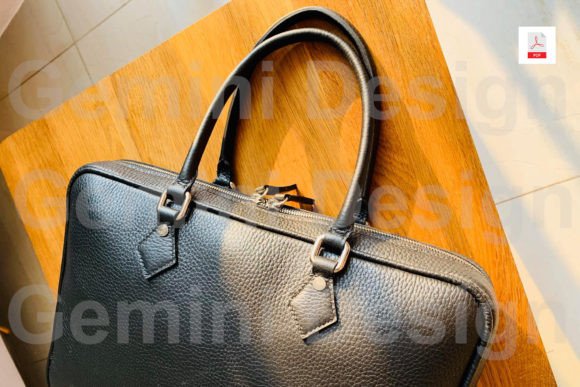
In the realm of bespoke leatherworking, the transition from a rough concept to a polished, functional accessory is often defined by the quality of the initial planning. For enthusiasts and professionals alike, creating a Leather Pattern Briefcase is not merely about cutting shapes; it is an exercise in geometry, material science, and aesthetic foresight. The modern maker has access to tools that were once exclusive to industrial factories, chief among them being high-resolution digital templates. This guide explores the nuances of utilizing a PDF File DIY approach to construct a durable, professional-grade briefcase, specifically focusing on the practical application of scaled paper patterns for handcrafting.
The Evolution of Digital Patterns in Handcrafting
Gone are the days when leatherworkers had to draft every seam allowance and curve by hand, relying solely on intuition and experience. While intuition remains vital, the integration of digital technology into traditional crafts has revolutionized accuracy. The core of this revolution lies in the ability to download, print, and assemble a precise template at home. When you acquire a digital pattern, you are essentially purchasing a blueprint that translates complex three-dimensional structures into two-dimensional flat layouts. This method significantly reduces material waste—a critical factor given the rising cost of premium hides—and ensures that every strap, pocket, and panel aligns perfectly during assembly.
The specific workflow involves taking a digital file, printing it onto standard paper, and assembling these pieces to create a physical mockup. This process allows the crafter to test the fit and proportions before committing expensive leather to the knife. It bridges the gap between digital design and tactile creation, offering a safety net against costly errors. For those new to the craft, this method provides a structured learning path, allowing them to focus on stitching and finishing techniques rather than struggling with basic pattern drafting.
Understanding the Specifications: Scale and Dimensions
A crucial aspect of any successful DIY project is understanding the exact specifications of the materials and tools provided. In the context of a standard Leather Pattern Briefcase, precision is paramount. The dimensions typically cited for such a project are 35 x 26 cm. These measurements refer to the final assembled footprint or key panel sizes, depending on the specific design architecture. However, raw numbers do not tell the whole story; the medium through which these numbers are interpreted matters immensely.
The pattern is designed for A4 scale printing at 100% magnification. This means that when you print the document, there should be no "fit to page" adjustments made by your printer driver. If the scaling is off by even a few millimeters, the cumulative error across dozens of pattern pieces can result in panels that do not match up, leading to misaligned holes for rivets or straps that fail to reach their intended attachment points. Therefore, verifying the print scale using the test square or marker included in the PDF is a non-negotiable step in the workflow.
Furthermore, the inclusion of punch holes in the digital design serves a dual purpose. On the printed paper, these holes allow you to pin the pattern securely to the leather, preventing slippage during tracing or cutting. On the final leather piece, these same locations indicate where hardware will be installed. By transferring these holes directly from the paper to the leather, you ensure that decorative elements and functional hardware are placed with surgical precision. This attention to detail elevates the final product from a homemade item to a store-ready commodity.
The Workflow: From Digital Download to Physical Assembly
Executing a PDF File DIY project requires a disciplined approach to preparation. The process begins with the acquisition of the digital file. Once downloaded, the first step is always a calibration test. Print a single page containing a measurement grid or a specific test shape. Measure the printed output with a ruler. If the dimensions do not match the specified size, adjust your printer settings until they do. This step saves hours of frustration later in the process.
After confirming the scale, proceed to print all pages of the pattern. Most comprehensive patterns include registration marks—small crosshairs or black squares located at the corners or edges of each page. These marks are essential for aligning multiple sheets of paper correctly. Use a sharp blade to trim along the outer borders of the pages, leaving just enough margin to overlap the registration marks. Align the marks precisely and secure the sheets with tape. The result is a large, contiguous paper template that mirrors the actual size of the briefcase components.
With the paper pattern assembled, the next phase is transfer. Lay the pattern onto your chosen leather hide. Secure it firmly. Trace the outlines carefully, ensuring you account for seam allowances if they are not already included in the digital design. Many modern patterns include built-in seam allowances, but it is wise to verify this. Once traced, cut out the leather pieces. At this stage, you have the raw components ready for assembly. The beauty of this method is that the difficult geometric calculations have been handled by the designer, allowing you to focus on the artistry of leather treatment, edge painting, and saddle stitching.
Material Considerations and Practical Applications
While the pattern provides the structure, the material defines the character. A briefcase is a functional object subjected to daily wear and tear. Therefore, the choice of leather is as important as the pattern itself. Full-grain leather is often recommended for its durability and ability to develop a rich patina over time. Vegetable-tanned leather is particularly popular among DIYers because it holds tooling well and stiffens nicely, making it ideal for structured items like briefcases. However, chrome-tanned leathers offer greater flexibility and water resistance, which might be preferable for users in wet climates.
The applications for a self-made briefcase extend beyond personal use. For small business owners or artisans, producing a limited run of high-quality bags can be a viable side hustle. The Leather Pattern Briefcase model offers a balance of complexity and manageability. It is complex enough to command a higher price point due to its perceived value and craftsmanship, yet simple enough that a skilled hobbyist can produce several units without requiring industrial machinery. Educators and makerspaces also find value in such projects, as they teach fundamental skills in measurement, cutting, and assembly in a tangible, rewarding way.
Advantages of the Paper Pattern Method Over Direct Cutting
One might ask why one would go through the trouble of printing and taping paper when one could simply measure and draw directly on the leather. The answer lies in consistency and confidence. Drawing freehand on leather is prone to human error. A shaky hand or a miscalculated angle can ruin a piece of leather that costs upwards of $50 per square foot. A paper pattern acts as a rigid guide, ensuring that every identical piece—such as the left and right side panels—is exactly the same. This symmetry is what gives a briefcase its professional look.
Additionally, the paper pattern allows for iterative refinement. If you notice that a strap needs to be slightly longer or a pocket positioned differently, you can adjust the paper template before ever touching the leather. This flexibility encourages experimentation. You might decide to add an extra interior compartment or change the style of the handle attachment. With a digital file, these modifications are easier to conceptualize and test on paper, reducing the risk of irreversible mistakes.
Common Pitfalls and How to Avoid Them
Even with a perfect pattern, challenges can arise during the construction phase. One common issue is the distortion of the paper pattern during the taping process. If the paper is not laid flat on a smooth surface, wrinkles can form, leading to inaccurate tracing. Always work on a clean, hard surface and use plenty of tape to flatten any bubbles.
Another pitfall is ignoring the grain direction of the leather. Leather is not uniform in strength; it is stronger along the grain and weaker across it. Patterns often indicate grain direction with arrows. Following these indicators ensures that the most stressed parts of the bag, such as strap attachments, utilize the strongest part of the hide. Neglecting this can lead to premature failure of the bag under load.
Finally, do not rush the cutting process. Use a sharp rotary cutter or a fresh utility blade. Dull blades can slip, causing jagged edges that are difficult to finish smoothly. Take your time to cut along the traced lines accurately. Remember, the goal is to create a Leather Pattern Briefcase that stands the test of time, and that starts with precise execution from the very first cut.
Conclusion
Creating a leather briefcase is a journey that blends technical precision with creative expression. By leveraging the power of a PDF File DIY system, makers can achieve professional results with accessible tools. The combination of accurate scaling, clear instructions, and the tactile satisfaction of working with leather makes this project highly rewarding. Whether you are crafting a gift, upgrading your professional wardrobe, or starting a small business, mastering the use of digital patterns is a skill that pays dividends in quality and efficiency. Embrace the process, respect the material, and enjoy the pride of carrying something you built with your own hands.