Laser Cut Flexible Living Hinge Svg File: A Guide to Creative Woodworking
In the realm of modern woodworking and digital crafting, few innovations have bridged the gap between rigid material properties and organic design as effectively as the living hinge. For creators seeking to add a dynamic, functional element to their projects without resorting to complex mechanical assemblies, the Laser Cut Flexible Living Hinge Svg File offers a sophisticated solution. This guide explores how these digital patterns transform standard materials like plywood and MDF into flexible, elegant structures, enabling everything from intricate jewelry to sturdy, hinged book covers.
Understanding the Living Hinge Concept
A living hinge is a thin section of material that allows a rigid object to bend or fold. While commonly associated with plastic clamshell packaging, applying this technique to wood requires precision engineering at the micro-level. The core principle involves removing specific sections of the material while leaving a network of tiny, interconnected bridges. These bridges act as pivots, allowing the main body of the wood to flex without breaking.
The challenge with traditional woodworking is that wood is naturally anisotropic—it has grain directionality that makes it prone to splitting when bent sharply. However, by using a laser cutter to etch a precise grid or pattern into the wood, we can disrupt the structural integrity just enough to allow flexibility while maintaining overall strength. This is where the Laser Cut Flexible Living Hinge Svg File becomes indispensable. It provides the exact vector data needed to instruct a laser cutter on where to remove material and where to leave it intact.
Features of the Digital Collection
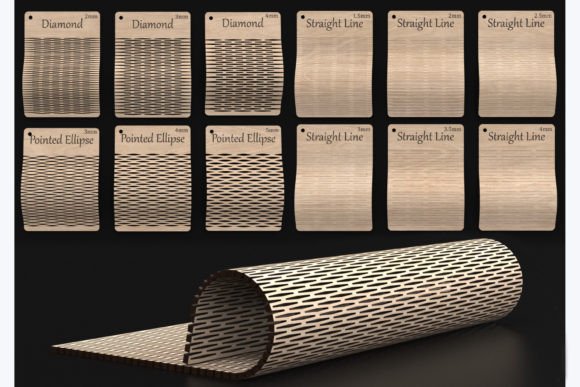
Our curated collection of living hinge files is designed to cater to both beginners and seasoned professionals. The package includes 12 intricate designs that balance aesthetic appeal with functional durability. Each pattern has been lovingly crafted to the highest standard, ensuring that the resulting hinges are not only flexible but also visually striking.
Tangible Previews and Large-Scale Patterns
To help users understand the potential of these designs, the collection includes 12 separate sample cards, approximately sized at 14cm x 10cm. These samples offer a tangible preview of the living hinge designs and their impressive ability to manipulate wood. By cutting out these smaller cards first, crafters can test the flexibility of different patterns and familiarize themselves with the laser settings required for their specific equipment before committing to larger projects.
Beyond the samples, you gain access to 12 sublime large-scale patterns, each spreading across a 30cm x 30cm square space. These substantial designs pave an easy way for integration, requiring only a simple quick merge with your artwork through basic software editing. Whether you are designing a full-sized box lid or a decorative panel, these larger files provide ample room for creativity while maintaining the structural integrity necessary for a successful hinge.
Material Versatility and Compatibility
One of the most significant advantages of using SVG files for living hinges is their adaptability across various materials. While wood is the primary focus, these patterns are versatile enough to work with other substrates. The provided SVG files have been precisely crafted to optimize compatibility with materials including 3mm, 3.2mm, and even thinner sheets of plywood, MDF, natural woods, metals, and certain acrylics.
- Plywood and MDF: These are the most popular choices due to their uniform density and ease of laser cutting. The layered structure of plywood works particularly well, as the glue lines can sometimes aid in the flexibility of the hinge.
- Natural Woods: Hardwoods like birch or maple can be used, though they may require more precise laser settings to avoid charring. Softwoods like pine are easier to cut but may lack the tensile strength for heavy-duty applications.
- Metals and Acrylics: With appropriate laser power adjustments, these materials can also benefit from living hinge designs, opening up possibilities for industrial design and high-end accessories.
Practical Applications and Use Cases
The versatility of the Laser Cut Flexible Living Hinge Svg File means it can be applied to a wide range of projects. Here are some common scenarios where these patterns shine:
- Book Covers and Journals: Create custom leather or wooden book covers with integrated hinges that allow the cover to lay flat or fold back smoothly. This adds a professional, bespoke touch to handmade journals.
- Jewelry Boxes and Storage: Design boxes with lids that fold open seamlessly. Unlike traditional metal hinges, living hinges are silent, sleek, and require no additional hardware installation.
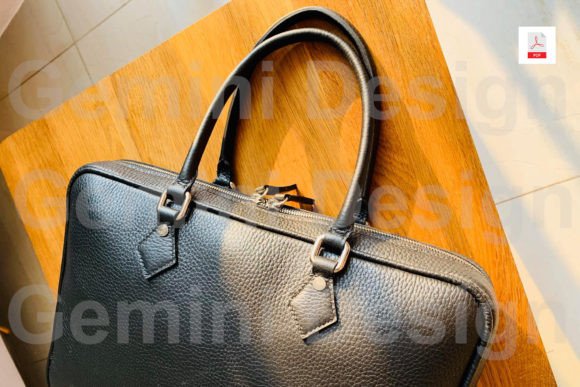
- Stylish Wooden Handbags: For fashion-forward creators, living hinges can be used to create structured bags with flexible straps or folding compartments. The combination of rigidity and flexibility allows for unique silhouettes.
- Educational Models: Teachers and students can use these patterns to create interactive models of mechanical systems, demonstrating principles of engineering and material science in a hands-on way.
- Decorative Art Pieces: Sculptural art that incorporates movement can be enhanced with living hinges, allowing static objects to change shape based on user interaction.
Considerations for Successful Implementation
While the technology is accessible, achieving perfect results requires attention to detail. Here are some practical expectations and tips for working with living hinge files:
Laser Settings
The success of a living hinge depends heavily on the precision of the laser cuts. If the cuts are too shallow, the material will not flex. If they are too deep, the bridges may break during testing. It is recommended to perform test cuts on scrap material to determine the optimal power and speed settings for your specific machine and material thickness.
Material Thickness
Thinner materials generally yield better flexibility. Files optimized for 3mm material may need adjustment if used with thicker stock. Always refer to the specifications provided with the SVG file to ensure you are using the correct material grade.
Design Integration
When merging the living hinge pattern with your own artwork, ensure that the layers are correctly aligned. Most vector editing software allows you to import the SVG file and adjust its position relative to your design. Pay attention to the orientation of the hinge; the flexibility usually occurs along the axis of the cut lines, so plan your design accordingly.
Evaluating Suitability for Your Needs
Before purchasing or downloading a living hinge file, consider the following questions:
- What is the intended load? Living hinges are not suitable for heavy-duty mechanical applications. They are best for light to medium loads, such as lids, covers, and decorative elements.
- Do you have the right equipment? You will need a laser cutter capable of fine detail work. Inkjet printers or vinyl cutters cannot achieve the necessary precision.
- Are you comfortable with post-processing? After cutting, the small chips of removed material must be cleaned out. This can be time-consuming for complex designs, so factor this into your project timeline.
Conclusion
The Laser Cut Flexible Living Hinge Svg File represents a powerful tool for expanding the creative possibilities of woodworking and digital fabrication. By combining the elegance of natural materials with the precision of laser cutting, creators can produce functional, beautiful objects that defy conventional expectations. Whether you are a hobbyist looking to enhance your next DIY project or a professional designer seeking innovative solutions, these patterns offer a reliable and inspiring foundation for boundless creative exploration. Embrace the flexibility of wood, and discover new ways to bring your ideas to life.