Evaluating the Beaded Bag Weave Pattern PDF and Video: A Comprehensive Guide to Handcrafted Crystal Accessories
In the realm of handmade accessories, few items command as much attention as a beaded crystal handbag. These pieces blend the elegance of jewelry with the utility of fashion, creating a statement accessory that stands out at any event. For crafters looking to create such a piece without relying on traditional textile methods like knitting or crochet, the Beaded Bag Weave Pattern PDF and Video offers a specialized solution. This resource provides a structured approach to weaving beads by hand, resulting in a durable, shimmering bag that requires patience but yields professional-grade results.
This analysis explores the specifics of this pattern, comparing its unique "weaving by hand" methodology against other beading techniques. It examines the required materials, the learning curve associated with the included video instruction, and whether this specific pattern is the right fit for your skill level and project goals.
Understanding the Core Methodology
The primary distinction of the Beaded Bag Weave Pattern PDF and Video lies in its technique. Unlike bead loom work, which relies on a physical frame to maintain tension and alignment, or standard crochet hooks that pull loops through loops, this pattern utilizes a direct hand-weaving method. The instructions guide the user through creating rows of beads that interlock to form a fabric-like structure. This approach allows for greater flexibility in shaping the bag and often results in a denser, more rigid final product that holds its shape well without internal stiffeners.
The resource is designed for an English-speaking audience, with all written instructions provided in US English. This clarity is crucial for complex patterns where terminology can vary significantly between regions. By removing language barriers, the pattern ensures that even beginners who are unfamiliar with niche crafting jargon can follow along effectively.
Why Choose Hand Weaving Over Other Techniques?
When evaluating options for creating a beaded bag, crafters typically consider three main approaches: bead weaving (hand), bead loom, and bead embroidery. Each has distinct advantages and tradeoffs.
- Bead Loom: This method is excellent for producing flat, uniform panels quickly. However, it requires purchasing a loom, managing warp threads, and dealing with fringe removal. It can be less forgiving when trying to create curved shapes like the body of a handbag.
- Bead Embroidery: This involves stitching beads onto a fabric base. While it allows for intricate designs, the finished item relies entirely on the underlying fabric for structure, which may not provide the desired rigidity for a standalone handbag.
- Hand Weaving (This Pattern): The Beaded Bag Weave Pattern PDF and Video eliminates the need for a loom or fabric base. The beads themselves become the fabric. This results in a lightweight yet sturdy accessory. The tradeoff is speed; hand weaving is inherently slower than using a loom, requiring significant time investment.
Material Requirements and Sourcing Considerations
A critical factor in any DIY project is the availability and cost of materials. The specified pattern requires precise components to ensure the structural integrity of the bag. Understanding these requirements helps readers determine if they should proceed with this pattern or seek alternatives that might use more common supplies.
Essential Components
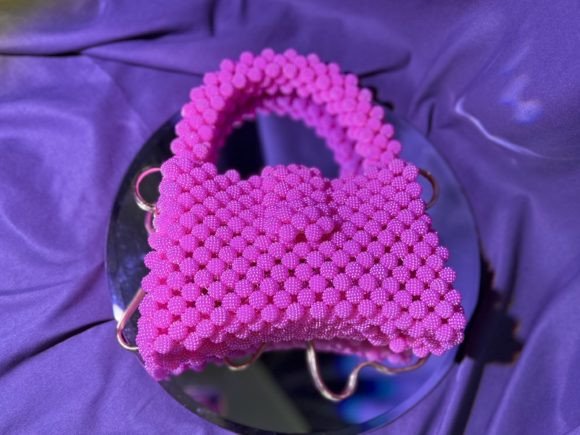
The pattern calls for bubbles beads with a 12 mm diameter and a 1.5 mm hole. This specific size is vital because larger holes allow the fishing line to pass through multiple times, securing the weave, while the large bead surface area creates the signature crystal look. You will need approximately 500 grams, or about 750 pieces, depending on the exact density of the weave.
The threading medium is equally important. The pattern specifies 0.5 mm fishing line. This choice is strategic; fishing line is transparent, making the thread invisible in the finished product, and it possesses high tensile strength, which is necessary to support the weight of the beads and the contents of the bag. Alternatives like nylon thread or silk thread may fray more easily or lack the necessary durability for a functional handbag.
Hardware and Finishing Touches
Beyond the beads, the pattern includes a comprehensive list of hardware:
- Closure: A magnetic sewing button (15-18 mm) provides a secure and discreet closure mechanism.
- Lining: A small piece of felt (1x1 inch) acts as a protective layer for the magnetic button, preventing scratches on delicate clothing.
- Strap Assembly: Two snap hooks, two O-rings (30-35 mm), and a chain (40-48 inches) are required to create the detachable shoulder strap. The length of the chain allows for versatility in how the bag is worn.
- Tools: Tweezers are essential for handling small beads, while a lighter is used to seal the ends of the fishing line. A needle and scissors round out the basic toolkit.
The final dimensions of the bag are substantial yet manageable: 8 1/4 inches (21 cm) in length, 6 inches (15 cm) in height, and a handle drop of 12 3/4 inches (32 cm). This size is ideal for carrying essentials like a phone, wallet, and keys, making it a practical evening clutch rather than just a decorative object.
Educational Support: PDF and Video Integration
One of the most compelling features of this resource is the dual-format instructional approach. The Beaded Bag Weave Pattern PDF and Video combines written text with visual media, catering to different learning styles.
The Written Pattern
The PDF component provides row-by-row instructions. For complex crafts, visualizing the progression from one row to the next can be challenging. Detailed written steps help clarify where the thread should pass and how many beads to incorporate in each segment. The inclusion of photos within the PDF further aids understanding, allowing users to cross-reference their progress with clear visual benchmarks.
The Video Tutorial
Complementing the text is a video tutorial lasting 1 hour and 28 minutes. This duration suggests a thorough walkthrough, likely covering not just the weaving process but also the assembly of the hardware and finishing techniques. For visual learners, watching the hand movements, tension control, and needle placement in real-time is invaluable. The video serves as a dynamic reference that static images cannot match, particularly for troubleshooting errors as they occur during the weaving process.
Evaluating Difficulty and Time Investment
For those considering this project, understanding the time commitment is crucial. Hand weaving 750 beads into a cohesive structure is a meditative but labor-intensive task. While the video is under 90 minutes, this likely represents the demonstration pace, not the actual crafting time. Beginners should anticipate spending several hours, possibly days, to complete the bag.
The pattern claims that no prior knowledge of crochet or knitting is required. This is accurate, as the skills involved are specific to bead manipulation. However, dexterity and patience are prerequisites. If you have struggled with fine motor tasks in the past, this pattern may present a steep learning curve. Conversely, if you enjoy repetitive, rhythmic crafting processes, this pattern offers a satisfying workflow.
Comparison with Pre-Made Options
It is worth noting that similar crystal bags are available for purchase in retail markets. However, buying a pre-made version often comes with higher costs due to labor markups and lacks the personal satisfaction of creation. Additionally, mass-produced versions may use lower-quality beads or weaker threading methods. By choosing the Beaded Bag Weave Pattern PDF and Video, you gain control over material quality and design customization, ensuring a heirloom-quality piece.
Decision Factors: Is This Pattern Right for You?
To determine if this resource aligns with your needs, consider the following decision matrix:
- Choose this pattern if: You enjoy detailed, slow-craft projects; you want a fully customizable accessory; you prefer learning through combined text and video formats; and you have access to specific bead sizes (12mm bubbles).
- Consider an alternative if: You need a quick project to complete in under an hour; you do not have tweezers or fishing line readily available; you prefer working with fabric bases rather than pure bead structures; or you find the concept of threading hundreds of beads individually overwhelming.
For the dedicated crafter, the Beaded Bag Weave Pattern PDF and Video represents a robust option for expanding their portfolio. It bridges the gap between simple jewelry making and complex bag construction, offering a clear path to a stunning final product. The combination of precise material lists, clear US English instructions, and comprehensive multimedia support makes it a reliable choice for both novice and intermediate beaders looking to tackle a ambitious project.