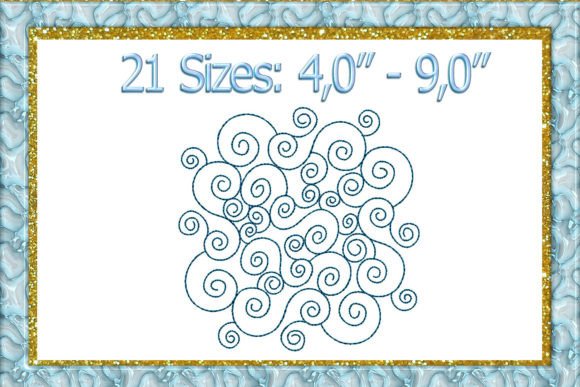
Enhancing Sewing Projects with the Quilting Swirls Block Embroidery Design
In the world of textile arts, few elements add as much texture and visual interest as quilting swirls. For enthusiasts looking to elevate their machine embroidery projects, the Quilting Swirls Block Embroidery Design offers a sophisticated solution that bridges the gap between traditional hand-quilting aesthetics and modern digital precision. This design is not merely a decorative border; it is a versatile tool that can transform simple fabrics into dynamic pieces of art. Whether you are working on a baby blanket, a tote bag, or a high-end garment, understanding how to integrate this specific pattern into your workflow can significantly improve the final outcome.
The appeal of the Quilting Swirls Embroidery Design lies in its organic flow. Unlike rigid geometric patterns, swirls mimic the natural movement of thread, creating a sense of depth and dimensionality that flat prints cannot achieve. When executed correctly, these designs provide what embroiderers call "stipple" effects—a technique characterized by small, irregular stitches that fill an area without obvious direction. This results in a soft, cloudy appearance that adds character without overwhelming the base fabric. The 621 TRIPLE STITCH variation mentioned in recent releases further enhances this effect, offering a denser, more pronounced texture that stands out against lighter materials.
Understanding File Compatibility and Machine Requirements
One of the most critical aspects of purchasing digital embroidery files is ensuring compatibility with your hardware. The Quilting Swirls Block Embroidery Design is engineered for broad accessibility, coming packaged in nine distinct formats to accommodate a wide range of embroidery machines. This versatility ensures that whether you own a vintage model or a state-of-the-art computerized unit, you will likely find a file that works seamlessly with your device.
The included formats cover the major industry standards:
- PES (Brother, Deco, Babylock): Ideal for home users who frequently switch between Brother and Babylock systems.
- DST (Tajima): The standard for industrial machines, often used in professional production environments.
- EXP (Melco): Compatible with Melco and certain older Bernina models.
- HUS (Husqvarna, Viking): Specifically optimized for the Husqvarna and Viking ecosystems.
- JEF (Janome, Elna, Kenmore): A popular choice for Janome and Elna owners.
- VP3 (Husqvarna, Viking): An alternative format for Viking users, often preferred for complex color changes.
- VIP XXX SEW (Janome, Elna, Kenmore): Another variant for Janome/Elna/Kenmore users, ensuring robust support across different software versions.
It is imperative to note that this product is strictly a digital file. There is no physical patch or pre-embroidered item included in the shipment. You must possess an embroidery machine capable of reading these formats, along with the necessary software to transfer the design from your computer to the machine’s memory. Without this infrastructure, the design remains a collection of code rather than a tangible decoration.
Material Selection and Stabilization Techniques
The success of any embroidery project hinges largely on preparation, particularly when dealing with delicate or stretchy fabrics. The Quilting Swirly Machine Embroidery Design involves significant stitch density, which can cause puckering if the fabric is not properly supported. Therefore, choosing the right stabilizer is not just a recommendation—it is a necessity for high-quality stitching.
For stable woven fabrics like cotton or linen, a cut-away stabilizer is often sufficient. However, the challenges arise when working with fine-knit fabrics, such as T-shirts, jersey, or children’s overalls. These materials have inherent elasticity, and the tension of the embroidery thread can distort them during the stitching process. In these scenarios, using a sticky (adhesive) stabilizer on the back of the fabric is highly recommended. This provides immediate hold, preventing the fabric from shifting under the needle.
Additionally, consider the tear-away option for temporary support. If you are embroidering on a larger project where you do not want permanent backing, a combination of a water-soluble top stabilizer and a tear-away bottom stabilizer can yield excellent results. The key is to ensure that the stabilizer matches the weight of the fabric. Heavy stabilizers on light fabrics create bulk, while light stabilizers on heavy fabrics may fail to prevent distortion. Always test your setup on a scrap piece of the same material before committing to the final piece.
Integrating Quilting Swirls into Modern Projects
The versatility of the Quilting Swirls Block Embroidery Design allows it to fit into various modern workflows and creative endeavors. It is not limited to traditional quilts. Instead, it serves as an excellent textural element in contemporary fashion and home decor. For instance, applying swirls to the pocket of a denim jacket adds a subtle yet stylish detail that elevates the garment from basic to bespoke. Similarly, incorporating these designs into nursery items, such as muslin blankets or hooded towels, introduces a soothing, organic aesthetic that appeals to parents seeking gentle, non-graphic designs for infants.
Furthermore, the stipple nature of the design makes it an ideal background filler. Many embroiderers use swirls to fill large areas of negative space, allowing them to place appliqué or lettering on top. This layering technique creates a rich, multi-dimensional look. By mastering the application of the Quilting Swirls Embroidery Design, you gain the ability to customize mass-produced items, turning plain t-shirts or aprons into unique, personalized gifts.
Practical Considerations for Optimal Results
To achieve the best possible finish with the 621 TRIPLE STITCH version of the design, attention to detail is paramount. First, ensure your needles are sharp and appropriate for the fabric type. A ballpoint needle is essential for knits to avoid snagging, while a microtex needle works well for wovens. Second, thread quality matters. Using polyester or rayon threads with consistent tension will prevent breakage and ensure smooth stitching paths.
Another practical tip is to hooping technique. Ensure the fabric is drum-tight in the hoop. Any slack can result in misalignment of the intricate swirl patterns, leading to gaps or overlapping errors. Regularly trim loose threads between color changes or sections to maintain a clean appearance. Finally, always run a test stitch on a similar fabric scrap. This step allows you to adjust tension settings and observe how the stabilizer interacts with the material, saving time and resources in the long run.
In conclusion, the Quilting Swirls Block Embroidery Design represents a powerful addition to any embroiderer’s library. Its compatibility with multiple machine formats, combined with its aesthetic flexibility, makes it a valuable asset for both hobbyists and professionals. By understanding the technical requirements—such as file selection, stabilizer usage, and needle choice—you can harness the full potential of this design. The result is not just an embroidered pattern, but a testament to the craftsmanship and creativity that define the modern sewing experience.