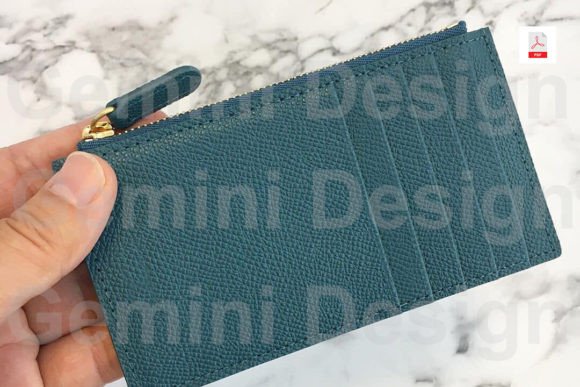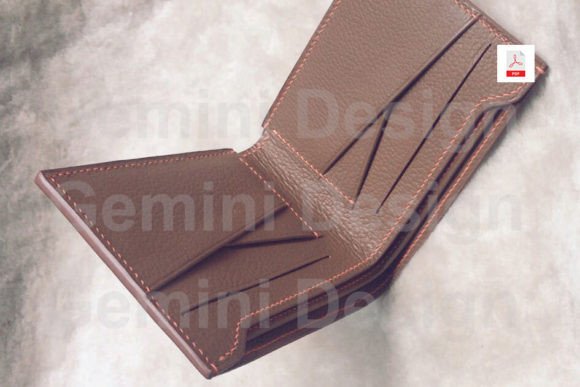
Leather Pattern Bifold Wallet, PDF File
Crafting a high-quality leather wallet is often viewed as the rite of passage for anyone entering the world of leatherworking. It is a project that demands precision, patience, and a steady hand. However, for many hobbyists and even small business owners, the initial hurdle is not the stitching or the cutting, but the pattern itself. This is where a Leather Pattern Bifold Wallet, PDF File becomes an indispensable tool in your workshop. By providing a precise, life-size template, this digital resource shifts the focus from guessing dimensions to executing professional results with confidence.
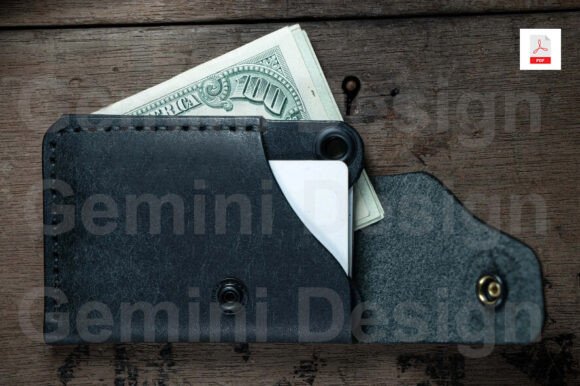
The concept behind using a digital PDF pattern is straightforward yet transformative. Instead of sketching designs on scrap material and hoping for the best, you receive a meticulously calculated layout designed for accuracy. The specific file discussed here offers a compact bifold design measuring 9 x 12 cm when folded. This size is particularly popular for modern aesthetics, offering a slim profile that fits comfortably into front pockets without creating bulk. For those who value minimalism and functionality, this dimension strikes the perfect balance between capacity and concealability.
Understanding the Digital Format and Usage
It is crucial to understand exactly what you are acquiring before beginning your project. This is a digital PDF form, not an actual physical item. You will not receive a pre-cut piece of leather or a plastic template. Instead, you receive a printable file intended for use on paper. This distinction is vital because it dictates how you prepare your workspace. The file is designed for A4 scale printing at 100% zoom, ensuring that every line and measurement corresponds to real-world dimensions.
When you print the Leather Pattern Bifold Wallet, PDF File, you create a physical guide that you can lay directly onto your leather hide. This method allows for efficient nesting of patterns, meaning you can fit multiple pieces onto a single sheet of leather to minimize waste. For small business owners and freelancers operating on tight margins, reducing material waste is just as important as the craftsmanship itself. By optimizing your layout using this digital pattern, you preserve expensive hides for future projects while still producing consistent products.
Accuracy and Precision in Every Cut
One of the most significant benefits of using a standardized digital pattern is the increase in product accuracy. When working by eye or using generic templates, slight variations in measurement can lead to misaligned holes, uneven edges, or a wallet that does not close properly. The provided pattern includes specific instructions for punching, with a designated step of 3mm for the holes. This level of detail ensures that your stitching will be uniform and professional-looking.
The 3mm punching step is a standard metric in leatherworking that provides enough space for thread to pass through cleanly without tearing the leather, while also maintaining a dense, secure stitch line. By following the pre-marked hole locations in the PDF, you eliminate the need for manual marking, which is prone to human error. This consistency is particularly valuable if you are producing wallets for clients or selling them online. Customers expect a certain level of quality, and uniform stitching is one of the first indicators of professionalism they notice.
Practical Benefits for Different Users
The utility of this digital pattern extends across various user groups, each benefiting in unique ways. For educators and bloggers, this file serves as an excellent teaching aid. It simplifies the process of demonstrating leatherworking techniques by removing the variable of pattern drafting. Students can focus entirely on cutting, skiving, and stitching, allowing them to grasp core skills more quickly.
For entrepreneurs and small business owners, time is money. The Leather Pattern Bifold Wallet, PDF File helps save time during the production phase. Without the need to draft new patterns for every batch, you can streamline your workflow. This efficiency supports scalability. As demand grows, having a reliable, repeatable pattern means you can maintain quality control across hundreds of units without the fatigue associated with constant design adjustments.
Hobbyists and creators also find value in the creative freedom this format offers. Because the base pattern is accurate, you have the flexibility to experiment with different leathers, colors, and hardware without worrying about structural integrity. You might choose a vibrant vegetable-tanned leather for a rustic look or a sleek black croc-embossed leather for a formal aesthetic. The pattern remains the same, allowing the material to shine.
Important Considerations Before You Start
While digital patterns offer numerous advantages, there are practical limitations and considerations to keep in mind. First and foremost, always test the sample on paper before using it on leather. This step is non-negotiable for achieving the best results. Paper is inexpensive and forgiving; leather is not. By assembling the paper version first, you can verify that all pieces fit together correctly, that the hinge area moves smoothly, and that the overall dimensions meet your expectations.
This testing phase also helps you identify any potential issues with your printer settings. Occasionally, printers may scale documents slightly differently than intended, even when set to 100%. Checking the printed pattern against a ruler ensures that the 9 x 12 cm final size is accurate. If you skip this step, you risk ruining a good piece of leather due to a minor printing error.
Additionally, be aware that this file is used for printing on paper and is not suitable for laser or CNC cutting directly. While some advanced users might attempt to adapt digital files for automated machinery, this specific PDF is optimized for manual crafting. Attempting to use it for laser engraving or CNC routing could result in poor cuts or damage to equipment if the file structure is not compatible. Stick to the intended use case: print, cut out the paper pattern, and use it as a guide for hand tools.
Enhancing Your Workflow and Creativity
Incorporating a structured pattern like this into your routine does more than just improve the final product; it enhances the entire crafting experience. There is a psychological benefit to having a clear roadmap. When you know exactly where to cut and where to punch, you work with greater assurance. This reduces anxiety and frustration, making the process more enjoyable.
Furthermore, the compact nature of the 9 x 12 cm wallet makes it an ideal gift item. Its size is manageable for beginners yet sophisticated enough for experienced crafters. This versatility strengthens communication with your audience if you are sharing your work online. You can showcase the transformation from a flat digital file to a tangible, useful object, highlighting the skill involved in bringing the design to life.
As you become more comfortable with this pattern, you may find yourself customizing it further. Perhaps you add extra card slots, change the stitching color, or incorporate monogramming. The foundational accuracy provided by the Leather Pattern Bifold Wallet, PDF File gives you the stability needed to innovate. You are building upon a solid base rather than starting from scratch each time.
Final Thoughts on Efficiency and Quality
In conclusion, the decision to use a digital PDF pattern is a strategic one that impacts both the quality of your output and the efficiency of your workflow. By choosing a Leather Pattern Bifold Wallet, PDF File, you are investing in precision, consistency, and time savings. Whether you are a seasoned pro looking to streamline production or a newcomer eager to create your first serious project, this tool provides the support you need to succeed.
Remember to respect the instructions: print at 100%, test on paper first, and use the 3mm punching step for optimal results. By adhering to these guidelines, you ensure that your leatherwork stands out for its craftsmanship and attention to detail. In a market saturated with mass-produced items, handmade goods with precise, professional finishes hold significant value. Let this pattern help you deliver that quality consistently, one wallet at a time.