Celebrating Life and Legacy: Mastering the Mexican Skull Crochet Pattern
There is a profound beauty in the intersection of tradition and modern craft, nowhere more evident than in the vibrant world of Mexican skull crochet patterns. For decades, the calavera (skull) has served as a powerful symbol in Mexican culture, representing not death, but the celebration of life, memory, and the cyclical nature of existence. Today, this iconic imagery has transcended its cultural roots to become a beloved motif in the global fiber arts community. Whether you are a seasoned crocheter looking to add a pop of color to your home decor or a beginner eager to tackle your first complex design, understanding the nuances of this pattern offers more than just a finished product—it offers a connection to history, artistry, and creative expression.
The Cultural Significance of the Calavera
To truly appreciate a Mexican skull crochet pattern, one must first understand the symbolism behind the design. The calavera is most famously associated with Día de los Muertos (Day of the Dead), a holiday celebrated primarily in Mexico on November 1st and 2nd. Unlike Halloween, which often focuses on fear and the macabre, Día de los Muertos is a joyful reunion between the living and the deceased. The skulls are adorned with flowers, bright colors, and intricate details to honor ancestors and celebrate their continued presence in the hearts of the living.
When you choose to crochet a Mexican skull, you are engaging with a rich artistic heritage. The designs often feature floral motifs, geometric shapes, and symmetrical patterns that reflect traditional Mexican folk art. By incorporating these elements into your crochet projects, you bring a piece of this cultural narrative into your daily life. It transforms a simple yarn project into a meaningful artifact that sparks conversation and appreciation for diverse traditions.
Techniques: Tapestry vs. Intarsia Crochet
One of the most exciting aspects of creating a detailed Mexican skull design is the choice of technique. While many beginners might assume that changing colors in crochet is complicated, there are two primary methods that make this process accessible and rewarding: Tapestry Crochet and Intarsia Crochet. Understanding the difference between these two can help you decide which method best suits your skill level and the specific look you want to achieve.
Tapestry Crochet: The Continuous Flow
Tapestry crochet is perhaps the most popular method for creating multi-colored motifs like skulls because it allows you to work in continuous rounds without cutting your yarn. In this technique, you carry the unused color up the side of your work, hiding it inside the stitches of the new color. This creates a dense, warm fabric that is excellent for amigurumi (stuffable toys) or coasters.
- Pros: No ends to weave in, faster workflow, and a sturdy fabric.
- Cons: Can create bulk if too many colors are carried, and tension management is crucial to keep the piece flat.
For a Mexican skull pattern, tapestry crochet is ideal if you want a smooth, rounded appearance where the colors blend seamlessly across the curves of the cranium and jawline.
Intarsia Crochet: The Clean Canvas
Intarsia crochet involves using separate balls or bobbins of yarn for each distinct color block. You do not carry the yarn across the back of the work; instead, you twist the yarns together when changing colors to prevent holes from forming. This technique results in a lighter, more flexible fabric and allows for sharper, more defined color boundaries.
- Pros: Lighter weight, no bulky layers, and crisp color definition.
- Cons: More ends to weave in, and managing multiple strands of yarn can be challenging for beginners.
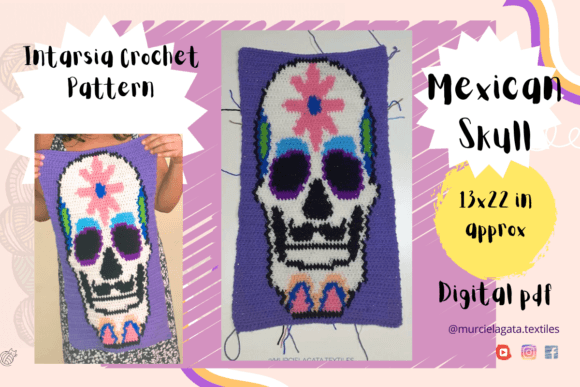
If your Mexican skull design features large blocks of solid color or intricate background patterns that don’t require carrying yarn across long distances, intarsia might be the superior choice. It mimics the look of a painted canvas, allowing the details of the sugar skull’s eyes and nose to stand out with precision.
What’s Inside the Downloadable PDF?
For those ready to embark on this creative journey, comprehensive resources are available to guide you through every step. A high-quality downloadable PDF document serves as your complete blueprint, ensuring that even complex designs feel manageable. Here is what you can expect to find within such a resource:
- Written Instructions: Clear, step-by-step directions that break down the pattern into manageable rows or rounds. These instructions typically use American terminology, which is standard in many English-speaking crochet communities (e.g., using "single crochet" instead of "double crochet"). If you are accustomed to UK terms, be sure to convert them mentally before starting.
- Graph Patterns: Visual charts are invaluable for colorwork. A graph translates the written instructions into a grid, where each square represents a stitch and each color indicates which yarn to use. This visual aid helps you anticipate color changes and maintain symmetry, which is critical for facial features like eyes and noses.
- Reference Images: Photographs of the finished project provide context. They show you how the tension should look, how the stuffing affects the shape, and how the colors interact in real-world lighting.
Having all these elements in one file means you don’t have to guess or search for additional tutorials. It provides a structured learning environment that supports both independent study and skill refinement.
Practical Applications and Modern Relevance
Why crochet a Mexican skull? Beyond its aesthetic appeal, this pattern fits seamlessly into various aspects of modern life. In the realm of home decor, a crocheted skull pillow or wall hanging adds an edgy yet colorful touch to bohemian or eclectic interiors. It serves as a conversation starter, inviting guests to ask about the symbolism behind the design.
In the world of gift-giving, handmade items hold immense value. A crocheted sugar skull keychain, ornament, or plush toy makes for a unique, personalized gift for friends who appreciate artisanal crafts or have an interest in Mexican culture. It shows thoughtfulness and effort, qualities that mass-produced items cannot replicate.
Furthermore, for educators and parents, this pattern offers a tangible way to teach children about cultural diversity. Working on the project together can lead to discussions about Día de los Muertos, helping young learners understand different perspectives on life and death in a respectful and age-appropriate manner.
Important Considerations for Creators
As you dive into your project, it is essential to respect the intellectual property rights of the designer. Patterns like those from Murcielagata Textiles are the result of significant time, creativity, and technical expertise. When you purchase a pattern, you are granted a license for personal use only.
Please adhere to the following guidelines to support the crafting community:
- No Sharing: Do not share, reproduce, or copy the pattern for any purpose, in whole or in part. This includes posting the PDF online or giving copies to friends.
- Photo Credit: If you post photos of your finished work on social media, ensure you credit the original designer. Do not re-publish the designer’s photos as your own.
- Contact Support: If you encounter difficulties with the instructions, feel free to contact the creator. Designers are often happy to clarify steps, as they want you to succeed in your project.
Getting Started: Your Next Steps
Once you have selected your preferred Mexican skull crochet pattern and completed your purchase, the files will be available for immediate download after payment confirmation. Take a moment to review the materials list—typically requiring medium-weight (worsted) yarn in black, white, and accent colors like pink, orange, or turquoise. Gather your hooks, scissors, and a tapestry needle for weaving in ends.
Remember, crochet is a journey. There may be moments where a stitch doesn’t look quite right, but patience and practice will yield beautiful results. Embrace the process of learning tapestry or intarsia techniques, and enjoy the satisfaction of holding a handmade piece of art in your hands. Thank you for supporting independent designers like Murcielagata Textiles, and most importantly, ENJOY the creative process!